WHAT DOES A CONDUCTOR DO?
Welcome
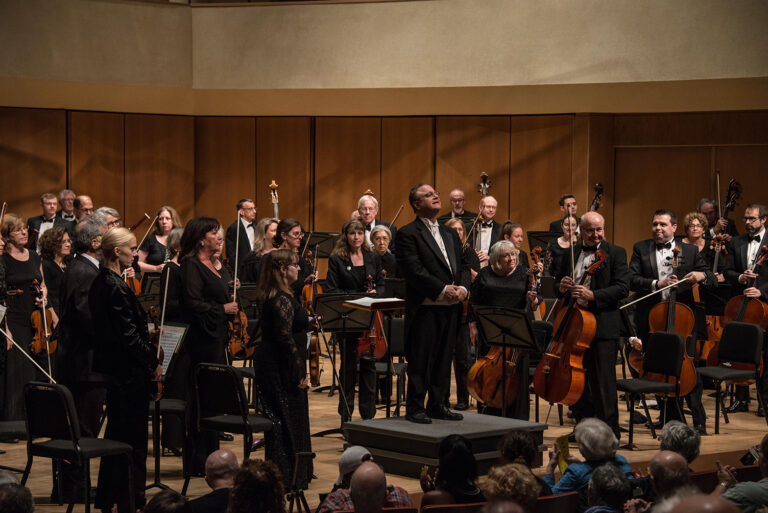
Welcome to my first blog post for my new website. Even though there are well over 1,000 orchestras in the United States alone, and each one has a conductor, it often remains mysterious what a conductor actually does. One reason is that a conductor does not directly make the sound. Another is that different conductors have different views of their role. In addition, different ensembles may need different things from a conductor at different times. Here, I will try to explain my own perspective.
Why the Conductor’s Role Can Seem Mysterious
From the audience’s point of view, the conductor stands on stage, moves their arms and body, and the orchestra plays. The sound comes from the musicians, so what is the conductor contributing to what the audience hears?
To understand this, it helps to imagine a connective line, one that begins with the composer’s imagination and ends with the audience hearing the music. The conductor’s work lives along that line.
From the Composer’s Imagination to the Score
A composer begins with an idea that becomes a composition. The composer imagines how the music should sound and writes notes and symbols that indicate pitch, rhythm, dynamics, articulation, and character. This written document is the score.
The score contains a great deal of information, but it does not provide every answer. It is a framework that requires interpretation.
From the Score to Sound
When a conductor studies a score, those written symbols become sound in the conductor’s mind. Through physical gestures using the arms, hands, face, and sometimes the entire body, the conductor communicates how the music should unfold. These gestures help shape tempo, character, phrasing, and emotional content.
The musicians, of course, have their own parts with notes and markings. What emerges in performance is a collaboration between the conductor’s interpretive concept and the musicians’ artistry.
Listening, Balance, and Communication
Another essential part of conducting is listening. The conductor listens constantly to ensure that each musical line is heard clearly, that balances are appropriate, and that the ensemble moves together. When adjustments are needed, they are communicated through gesture and rehearsal.
The conductor may also cue entrances for individual instruments or sections, helping coordinate complex musical interactions across the orchestra.
Creating a Unified Musical Concept
The score alone is not enough to determine every detail of a performance. For the rest, the conductor must use imagination, experience, and musical judgment to develop a cohesive concept of how the piece should sound. The goal is to bring the orchestra together around that shared understanding.
When this works well, the audience hears a unified musical statement rather than a collection of individual parts.
The Conductor as a Musical Connector
In the end, the conductor serves as a bridge. The audience hears the composer’s message as filtered through the conductor and realized by the orchestra. Each performance becomes a living interpretation shaped by everyone involved.
The next time you attend a concert, you might imagine that you are hearing the composer’s ideas travel through that chain of imagination, interpretation, collaboration, and sound.